• About Oren
  • Edited Anthologies
    • The Odds Are Against Us
  • Fiction by Oren Litwin
  • Lagrange Books
    • Calls for Submissions
      • The Future of Audience-Driven Writing
      • Archives
        • Call for Submissions— “Asteroids” Science-Fiction Anthology
        • Call for Submissions— “Family” Fantasy Anthology
        • Call for Submissions—Military Fiction Anthology
        • Call for Submissions—”Ye Olde Magick Shoppe” Fantasy Anthology
    • The Wand that Rocks the Cradle: Magical Stories of Family
    • Ye Olde Magick Shoppe
  • Politics for Worldbuilders
  • Scholarship

Building Worlds

~ If You Don't Like the Game, Change the Rules

Building Worlds

Author Archives: Oren Litwin

“The Odds Are Against Us,” coming soon!

11 Monday Feb 2019

Posted by Oren Litwin in Self-Promotion, Writing

≈ 1 Comment

Tags

anthology, coming soon, cover art, short story anthology

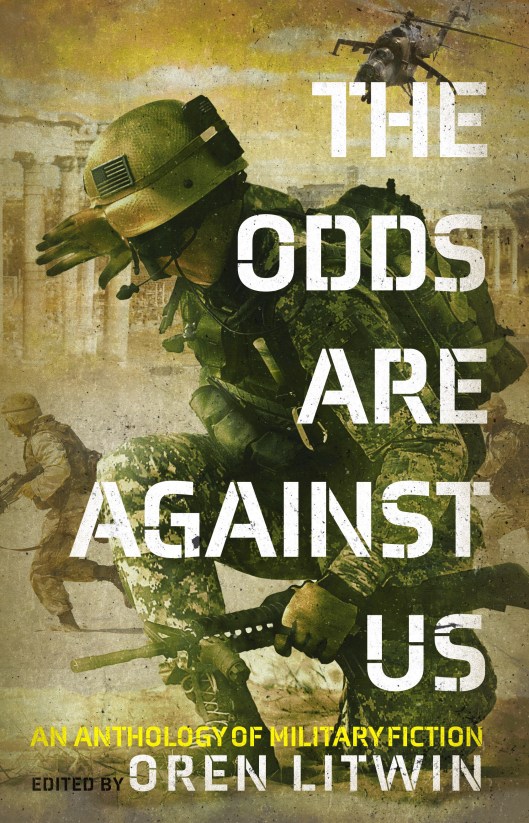
I am pleased to report that my first anthology project, The Odds Are Against Us, is nearing publication by Liberty Island Media. We even have shiny new cover art! Behold:

OAAU Final Cover

More details forthcoming as they get nailed down. After we launch, I also plan to do a post comparing the experience of working with a small press versus self-publishing my other anthology, and the pros and cons of each. So stay tuned!

Creating Story Conflicts with Politics

31 Thursday Jan 2019

Posted by Oren Litwin in Better Fantasy, Politics for Worldbuilders, Self-Promotion, Writing

≈ Leave a comment

Tags

anthology, Fantasy, short stories, short story anthology, writing

(This post is part of Politics for Worldbuilders, an occasional series.)

For a long time now, I’ve been slowly accumulating material in the “Politics for Worldbuilders” series, which will eventually become a book with the same title. I think I’ve managed to cover all the topics necessary, but now I need to revise each section and create writing exercises. In the meantime, here is a concrete example of how I used some of the concepts to write strong fiction.

Recently I edited and published Ye Olde Magick Shoppe, a collection of twelve fantasy short stories. One of the stories is mine, written under the pen name of “Jake Lithua.” It was directly inspired by my studies of politics, and in this post, I’ll be showing you how.

In the story’s world, the Eridari Empire has established colonies in a new land across the ocean, which it has modestly called New Erida. Its plantations there are worked by slaves, captured or bought from the indigenous peoples living in the hills around the colonial cities. Nevertheless, the reach of the colonial troops is limited, and they cannot simply take whatever they want. To access the richest treasures in this new land, colonists need to trade with the locals—a risky proposition, given that these are the same colonists who work the plantations with indigenous slaves!

The parallels with Africa and South America are fairly obvious. Beyond that, however, the setup borrows liberally from James C. Scott’s The Art of Not Being Governed. In particular, Scott notes that urbanized states often took slaves from stateless foraging peoples—but just as often, it was competing stateless groups who were raiding each other, and selling the losers to the city-dwellers.

Moreover, the foraging peoples often had much greater penetration into wild country than did urban powers, which meant that they could gather valuables such as spices, exotic animals, or gems and then sell them. In fact, for most of human history until the past two or three centuries, states and the surrounding stateless peoples lived in a kind of uneasy symbiosis, alternating between war (in both directions!) and trade.

What this meant for the short story was that the protagonist, a young trader venturing into the hills in search of rare magic, immediately finds himself facing justified hostility from the Men of the Hills, who have suffered greatly from the colonial power. But the Men of the Hills were also open to trade, in principle—if the terms were good enough. And the intermittent relations between the colonists and the indigenous people also sets up the main antagonist, who has secretly been doing some trading of his own.

Building the setting from specific political-historical patterns, rather than simply relying on the tired trope of the Noble Savage, helped create compelling conflict with high stakes and surprising twists. You can read the story yourself and decide if the end product was successful (and leave a review if you liked it!). But I think this illustrates how our fiction can be enriched by injecting a bit of political texture. I don’t demand realism for realism’s sake; but having more tools to work with can help us craft new, effective stories. And isn’t that the whole point?

“Ye Olde Magick Shoppe” Paperback is Out!

17 Thursday Jan 2019

Posted by Oren Litwin in Self-Promotion

≈ 2 Comments

Tags

Amazon, Fantasy, short story anthology

Well, after all the minor annoyances and oddities, the hardcopy edition of Ye Olde Magick Shoppe is now available for purchase!

Amazon has not yet linked the Kindle page to it yet, so reader reviews are not yet shared; but that should happen in a few days.

Enjoy!

Frustrations with KDP Paperback…

09 Wednesday Jan 2019

Posted by Oren Litwin in Writing

≈ 1 Comment

Tags

kdp, Kindle, Self-publishing

UPDATE: And of course,  Amazon tech-support responded within hours of this post going up! It turns out that the problem was with their backend not working nicely with Apple’s PDF generator, Quartz. I had to re-export to PDF using Adobe’s PDF Pack service (at the low, low price of $9.99 for the month, grumble grumble), and then it worked fine. Today I learned…

———

Almost three weeks ago, Ye Olde Magick Shoppe was launched on the Kindle Store. The original plan was to offer the paperback edition along with the ebook; unfortunately, I’ve been running into some problems submitting the files to KDP, which persist until today.

For whatever reason, when I launch the Previewer tool in the title setup process, it hangs for several hours (!) and then tells me that there was an unknown error with the interior files. Amazon’s tech support, which is usually pretty responsive, has been quite slow with its responses this time.

Which is all very annoying. I know several people who prefer paperback books to electronic, and would love to get the anthology into their hands.  Many reviewers also require a hardcopy version, and won’t look at electronic files. Some indie writers stick to Kindle digital,  and given what we’re now going through I can certainly see why; but still, the lack of a paperback option is holding us back.

The PDF file I’ve been submitting is generated by Scrivener 2.  Publishers like Ingram Spark require more professional formatting, but at least in the old days of CreateSpace any old PDF would do. Does anybody know if that has changed? Amazon’s FAQs were rather vague.

Ye Olde Magick Shoppe—Free Today Only!

23 Sunday Dec 2018

Posted by Oren Litwin in Self-Promotion, Writing

≈ Leave a comment

Tags

anthology, Fantasy, free, Kindle, magic shop, promotion, publishing, sale, short stories, short story anthology, werewolves, zombies

I’m proud to announce that my anthology of fantasy short stories, Ye Olde Magick Shoppe, is now available for Amazon Kindle!

Even better, until the end of today—Sunday the 23rd—it is totally free for download. Check it out, and please review if you like what you read!

New Anthologies!

17 Monday Dec 2018

Posted by Oren Litwin in Self-Promotion, Writing

≈ Leave a comment

Tags

call for submissions, edited anthology, Fantasy, publishing, Sci-fi, short stories, short story anthology

The next month or two is shaping up to be incredibly exciting. My first anthology, The Odds Were Against Us, is due to be published by Liberty Island Media; and my second, Ye Olde Magick Shoppe, is fully edited and is going to be self-published as soon as we get everything else whipped into shape. Which means that I’ll be spamming this blog with lots of crass self-promotion before too long…

In all seriousness, the last couple of years have been a tremendous learning process. It’s humbling when other people trust you with their writing, and thrilling when an edit can take an already solid piece and add that extra sparkle. I’m also grateful for good software, particularly Scrivener, which is making the whole publishing process much less painful than it used to be back in the bad old days.

In the meantime, what comes next? MOAR anthologies!

I’m opening up calls for submissions to two themed anthologies, one fantasy, one science fiction. The science-fiction one has the theme of “Asteroids”; and the fantasy one has the name of “Family”. Neither of these is a final title; I wanted people to get the chance to start writing quickly, before I took the time to come up with something clever.

Check out the full descriptions, and if either of the themes grabs you, the deadlines are March 1st of next year.

Good luck!

The Joy of Editing

10 Wednesday Oct 2018

Posted by Oren Litwin in Self-Promotion, Writing

≈ 1 Comment

Tags

short story anthology

As I’m eagerly waiting for my first anthology to be published (the publisher assures me that it will be Real Soon Now™), I’ve nearly finished editing the second, Ye Olde Magick Shoppe. This one was a challenge because the authors went in so many directions with the theme; but the whole collection is going to be a treat, I’m happy to say.

I wonder though if my editing method is similar to how it usually works. Basically I go through a draft, “track changes” in Word and then ruthlessly change things I feel like and add notes where I want clarification, and hand it back to the authors and ask for their reactions; a few rounds of this and we usually come to a consensus, though at times it involves some bruised feelings. It’s a bit authoritarian and there might be a gentler method that would work better, and I’d like to know of one if so.

Still, I do have confidence in my own “reader’s ear.” I want the short stories to be the best they can be, and I hope my authors understand.

Can’t wait for our babies to be launched!

Control, Capital, and Political Bargains

05 Sunday Aug 2018

Posted by Oren Litwin in Better Fantasy, Politics, Politics for Worldbuilders, State Formation

≈ Leave a comment

Tags

indirect taxation, slavery, State Formation, Taxation, worldbuilding, writing

(This post is part of Politics for Worldbuilders, an occasional series.)

We’ve talked before about how states need to control their people, and so structure their very environments to make that easier (making them legible, for one thing). We’ve also talked about how states need to do the same thing with production and wealth, in order to collect taxes. When states are less able to extract taxes directly, they may have to rely on indirect means such as tax farming, which are less efficient and may cause other problems.

In a way, these are two examples of the same problem: states need to control resources, and different types of resources are easier or harder to control. Farmland is easy to tax: it can’t be hidden, and its production is fairly easy to monitor. An international merchant is much harder to tax: his goods may be anywhere in the world, or hidden in a bank vault somewhere, or converted into precious gems and sewn into his clothing. Factories are easy to tax, or even to confiscate entirely: they represent a massive upfront investment that is hard to move, and their production is easy to monitor. People can be easy or hard to tax (or conscript, or otherwise control), depending on how easily they can move from place to place, or hide from the local taxman.

To take a more fantastical example, magic might be easy or hard to control, depending on how magical power is accumulated and used. For example, some Polynesian societies believed that the brightly-colored feathers of certain birds conveyed magical power, or mana, and chiefs would have their subjects scour the islands to find such feathers. Individual feathers gave little power, and it was not worth the ire of your chief to withhold a handful of them; but the chiefs, sitting at the top of their societies, could accumulate thousands or tens of thousands of such feathers, which would be made into beautiful ceremonial mantles or coats.

If a state is lucky, it will control rich resources that are easy to tax, such as travel on a busy overland trade route, or oil wells or gold mines, or a large population of unarmed people in a confined area. With such a bounty, the state will have less need to worry about gaining the cooperation of its (other) people, and can be fairly hands-off. However, what if the available wealth is hard to tax? What if there are few people and lots of land for them to escape to, as in the African plains or the Russian steppes? What if your economy is built on ship-based trade and banking, as with the Dutch?

Generally, the state (or anyone, really) can respond in two ways: with overwhelming coercion, or with some kind of political bargain—sharing power or granting civil rights in exchange for cooperation. Russia imposed serfdom on most of its populace, tying them to specific wealthy landowners; in much of Africa, likewise, rulers used sophisticated strategies of control and coercion, including slavery, to keep their subject peoples under control. Colonial powers often imposed a head-tax on native peoples, extracting taxes without needing to worry if the poor individuals could actually afford them.

The Dutch, on the other hand, incorporated their merchant class into the government; Italian city-states often structured their taxes as a kind of forced loan, paying interest on their “debts” and turning taxpayers into investors. Famously, the American colonists declared “No taxation without representation!” And the link between these two things is quite strong: the earliest parliaments had power against their monarchs because (and only because) they had direct control over taxation.

Athens and Sparta combined both approaches: a large population of slaves or helots, over which was a broad ruling class with a say in government, whether through actual democratic voting or other means. The difference was that citizens were armed; they were both necessary for civil defense (or conquest), and very hard to tyrannize.

Rulers faced with difficult problems of resource control can either choose to use coercion in response, or to strike a bargain and share power or create political rights. Though some social scientists claim that granting rights is more likely, the truth is that it is merely more effective; short-sighted rulers often use coercion even when it fails, as we see today in places like Venezuela.

This is good news for authors, as we can present political problems to our invented societies and have them respond in the most convenient manner for the plot. Other useful questions: what resources are most difficult for the rulers to control? Are they dangerous in the wrong hands? Could a new kind of power or wealth or magic, or a new population of people, upset the existing calculus of control? What are the costs to the rulers for relying on indirect strategies like tax farming or delegating power to local lords? Might a farsighted politico realize that a different form of control, or a new political bargain, would yield better results?

Rebellion, Part Two

29 Sunday Jul 2018

Posted by Oren Litwin in Politics for Worldbuilders, Revolution, State Formation, War, Writing

≈ Leave a comment

Tags

comparative politics, coup, French Revolution, revolution, writing

(This post is part of Politics for Worldbuilders, an occasional series.)

In our earlier discussion of different kinds of rebellions (and why worldbuilders may benefit from expanding their mental models of rebellions beyond Robin Hood and Parisian riots), we arbitrarily defined four types: violent contention, secession, coups, and revolutions. We then briefly discussed the first two. Now, let’s finish our list by talking about coups and revolutions.

Neither violent contention nor secession intends to totally overthrow the existing government (necessarily); the rebels want to better their own condition or to break away, but to leave the rest of the society more or less as it was. In coups and revolutions, on the other hand, the point is indeed to overthrow the ruler. The difference between them lies in who is doing the overthrowing, and whether they mean simply to take control of the regime or to demolish it and put some other regime in its place.

We’ve discussed before the selectorate model of regimes, in which a subset of the populace is the selectorate, meaning that they could possibly be part of the ruling coalition. In a coup, members of the selectorate decide to replace the current ruler with another one better to their liking, usually so that they themselves have more power within the new ruling coalition. However, they typically do not want to destroy the structures of the government in their coup; rather, coups typically happen swiftly, aiming to paralyze the ruler’s supporters long enough for the plotters to seize the ruler’s person, and then declare their victory a fait accompli. (This is why in most modern coups, the coup plotters will try to capture the country’s media stations—both to present the impression of overwhelming control, and to prevent regime loyalists from coordinating a response.) Then, after a bit of reshuffling and the odd loyalty purge, the bureaucracy and the army are meant to fall in line, and life will go on.

For a coup to work, the ruler and perhaps large parts of his ruling coalition would have to have weak legitimacy and little loyalty among the military; that way, few will object too much if they are replaced. However, the selectorate itself should either still have prestige in society or at the very least enough raw power to stay on top. So for example, if King Gunther the Mad were quietly removed to an asylum by a cabal of noblemen, and replaced by his infant son Rudolph the Tiny (with Chancellor Grise acting as regent, of course!), the plotters might settle scores with a few of Gunther’s supporters; but fundamentally, they do not challenge the idea that noblemen should rule society. Why would they? They are noblemen themselves!

In a coup, the government might change, but the regime persists—the system of elites and state institutions that sustains the power of the government. This is not the case in a revolution. Here, the regime itself has decayed so badly that a broad popular uprising is able to sweep it away entirely. Old elites are dispossessed or killed, old justifications for state power become obsolete; a new group of elites arises at the head of the revolutionary mass, claiming power. 

In a revolution, the old selectorate is replaced by a new selectorate, justified by a new principle of legitimacy (the new selectorate might nevertheless include some of the same people as the old one, but not always). All the old relations between classes and social groups are upended, and new relations form. This is the distinguishing mark of a revolution in the comparative-politics sense. (Which is part of why I prefer to think of the American Revolution as more of a secession; yes, the idea of breaking free of the king was fairly novel, but within American society it was the existing elites who took over.)

For a revolution to succeed, the entire elite stratum has to be losing its grip. In pre-revolutionary France, for example, the French monarchy was deeply in debt and had ceded much of its authority to tax farmers, who harshly oppressed the populace. Worse, the nobility had largely retreated into decadence instead of paying attention to the society around them, where dangerous new ideas about democracy and enlightenment (not to mention the execrable Rousseau, whose philosophy set the stage for modern totalitarianism) were taking hold among the growing middle class, inspired by the example of the United States. A few nobles even became important revolutionaries, such as the lamented “Philippe Égalité,” otherwise known as Louis Philippe II, Due d’Orleans. (This is a common pattern in revolutions: their leaders are often part of the old elite, usually embittered with the old regime and upholding new ideals, or marginalized and seeking more power or personal meaning as part of a revolutionary vanguard.)

Importantly, because the regime is falling apart, several different types of revolutionaries usually spring up to fill the void—and they may not like each other much. In the 1979 Iranian Revolution, not only Khomeinist Islamists rose up but also communists, trade unions, liberals, and business groups. Indeed, Khomeini’s faction seemed to be among the weaker ones, and few expected that they would end up taking power. However, if all of the state’s institutions crumble, power ends up in the hands of whoever is most ruthless. The initial hopes of a new age of Persian freedom were dashed by the rise of Khomeini, who quickly massacred the non-Islamist revolutionaries and imposed a brutal theocracy.

Similarly, the initial group of humanists and liberals who led the French Revolution were quickly displaced by vicious absolutists like Robespierre, driven by fantastic visions of a perfect society and willing to spill rivers of blood to get there. Before long, the overthrow of the monarchy, the nobility, and the Church (the old elites) became only the first stage of a ruthless war by the new French state against its own citizens, where today’s ruling clique became tomorrow’s victims of the guillotine. (You can read a fascinating account of one dimension of the revolutionary madness in the free book Fiat Money Inflation in France—which is also interesting in its own right because of when it was written, when it was republished, by whom, and in what context. But I digress.)

Revolutions usually end badly, because the idealists who begin them are usually replaced by ruthless murderers who smell the chance for power and take it. A similar process, although slower, can happen in the course of some longer revolts such as secessions or violent contention; the history of the Autodefensa movement in Mexico is a good example. (In the famous phrase of Eric Hoffer, “Every great cause begins as a movement, becomes a business, and eventually degenerates into a racket.”) To me, it seems that the only way to reliably defend against the ascension of the vicious is for the rebels to build strong institutions of governance early, and to sustain them over the course of the revolt. This, I think, is the main reason that the American Revolution was so successful in the long run: because the colonial legislatures had a long heritage and political tradition that could resist the rise of extremism. Gestures toward a true revolution such as Shays’ Rebellion never got past the stage of violent contention, and were quickly put down.

****

Authors can consider questions such as: What is the goal of the rebels? Is the regime stable enough to defend itself? Are things likely to snowball out of control and become much larger? Who among the rebels is most ruthless, and would they impose themselves on the others? Is this revolt a contest between different groups of elites, or between the elites and groups out of power? Do any of the elites join the rebels anyway? Do the rebels have a competing political principle to justify their rule instead of the existing regime, or several conflicting principles?

Before the State: Egalitarian Bands

18 Wednesday Jul 2018

Posted by Oren Litwin in Politics, Politics for Worldbuilders, State Formation, Writing

≈ 1 Comment

Tags

egalitarian, State Formation, worldbuilding, writing

(This post is part of Politics for Worldbuilders, an occasional series.)

The very earliest groups of people in prehistory, as far as we can surmise, were small bands of nomadic foragers. Such bands have continued to exist down to the present day, though they are becoming increasingly hemmed in by powerful states who prefer people to be stationary, formally employed, and taxable. Still, many of our social intuitions were formed in an ancestral environment of such nomadic bands, so we should discuss them first and foremost.

Assuming that a band does not possess livestock, its members can only own what they can carry. As a result, the social structure is relatively flat; there are no wide class distinctions as are typical in “civilization.” (Civilization does have its advantages, of course, but that is not our present topic.) That is not to say that people are equal; all primates are acutely sensitive to status distinctions, humans included, and any social group will have its pecking order. More successful hunters or warriors will accumulate trophies, jewelry, or marks of prestige, and probably higher-status mates as well. Still, compared to more complex societies, we can still describe such bands as broadly egalitarian.

That doesn’t guarantee that they will stay that way. Commonly, such bands will have a leader or big man (as the anthropologists would call him—and barring magic or some other equalizer of the sexes, he will almost certainly be a man), who has the respect of the others even without having formal authority or privileges. Over time, a canny big man can formalize his position and even pass it on to his sons, becoming a true chief. Initially, the chief or big man would be expected to use his power to redistribute possessions among the band, rather than enriching himself; but with enough political skill, a chief can build a cadre of supporters who will back him as he does in fact become more wealthy (as will they!). Thus does an egalitarian band develop political structures and social classes.

Those bands that remain egalitarian usually manage the feat because of an explicit aversion to hierarchy. To prevent hierarchies from emerging, or to constrain nascent hierarchies as they form, egalitarian bands often discourage inequality with several strategies. The first is an overwhelming social environment of envy. Anyone becoming conspicuous by gaining social power or wealth could expect to be the subject of malicious gossip, petty acts of uncooperation (in James C. Scott’s term, “weapons of the weak”), and later, public disapproval, political opposition, and even magical curses or physical violence. Attempting to dominate an egalitarian band is a risky business.

Second is expecting those with many possessions to be generous with them. This could be through public feasting, or socially required gifts to others, or sacrifices to the gods. (The anthropologist David Graeber has a long and amusing discussion of such mandatory gift-giving.)

This expectation persists even in a hierarchical setting. In most societies, the wealthy and powerful are expected to foster patron-client relationships, in which the powerful patron is served by the weaker clients, and in return the client can expect the patron’s support and protection. You can think of feudalism as a formalized patron-client relationship; the vassals owe taxes and service to their lords, but the lords are expected to defend the rights of the vassals in return. Another example would be large landowners in places like precolonial Southeast Asia; the landowners often took very high percentages of the crop from their sharecropper farmers, but if times were bad, the farmers would expect the landowners to give them food from their storehouses (or risk getting lynched!).

Third, if conditions within a band became intolerable for some of its members, they would simply leave. The band could split, with the dissidents moving somewhere else and leaving any would-be strongman with a vastly diminished pool of manpower. (In the literature, this is called fission.) Obviously, this would be traumatic to the people involved, and would only be a last resort; but the threat of fission does much to keep ambitious leaders in check.

It is no accident that developed states often arose in cramped geographic areas that made it hard to escape, or else at a time when the society was facing outside invasion, which would likewise make it difficult (practically as well as morally) to simply leave. Mobility gives choices; choices constrain political domination. The lack of choice means that band members have little recourse when their chief decides to cement his power. (This concept is applicable even within developed states; the American West played the role of an escape valve for the urban centers of the Northeast, threatening a population drain in response to the more obnoxious schemes of politicians. See James C. Scott for more examples, in Southeast Asia and elsewhere.)

The concepts here offer much to authors. Here are a few thought-provoking questions, in building your setting: What social expectations does your society place on the wealthy? How far are they tolerated, before risking violence from those with less? If the society is egalitarian, how does it stay that way? What role do gossip, threats of violence, or malicious charms and curses play in keeping powerful figures in check? Do political leaders risk driving off their populace if their policies are too harsh, or foolish? Did your protagonists come from somewhere else, and if so, why did they leave? What attitudes or personality traits does that convey, or were taught to them by their experience?

← Older posts
Newer posts →

Recent Posts

  • A Rabbi Shows Up in the “Dresden Files”
  • What Went Wrong in Kung Fu Panda 2
  • Johnny Cash and the Art of Adaptation
  • An Aside on Early Disney
  • Different Types of Federalism

Meta

  • Create account
  • Log in
  • Entries feed
  • Comments feed
  • WordPress.com

Not a fan of RSS? Enter your email address to follow this blog and receive notifications of new posts by email.

Join 230 other subscribers

Archives

  • January 2026
  • December 2025
  • November 2025
  • September 2025
  • July 2025
  • May 2025
  • February 2025
  • January 2025
  • September 2024
  • July 2024
  • November 2023
  • October 2023
  • September 2023
  • July 2023
  • June 2023
  • May 2023
  • April 2023
  • March 2023
  • February 2023
  • January 2023
  • December 2022
  • November 2022
  • October 2022
  • August 2022
  • July 2022
  • June 2022
  • May 2022
  • April 2022
  • March 2022
  • January 2022
  • December 2021
  • November 2021
  • August 2021
  • July 2021
  • June 2021
  • June 2020
  • May 2020
  • November 2019
  • September 2019
  • August 2019
  • May 2019
  • April 2019
  • March 2019
  • February 2019
  • January 2019
  • December 2018
  • October 2018
  • August 2018
  • July 2018
  • June 2018
  • May 2018
  • April 2018
  • March 2018
  • February 2018
  • July 2017
  • February 2017
  • December 2016
  • December 2015
  • December 2014
  • November 2013
  • August 2013
  • May 2013
  • April 2013
  • January 2013
  • November 2012
  • October 2012
  • September 2012
  • August 2012
  • July 2012
  • June 2012
  • May 2012

Categories

  • Better Fantasy
  • Credit
  • Economics
  • Education
  • Finance
  • Health
  • History
  • Homeschooling
  • Investing
  • Lagrange Books
  • Manifesto
  • Military
  • Movies
  • Music
  • NaNoWriMo
  • Politics
  • Politics for Worldbuilders
  • Real Estate
  • Revolution
  • Self-Actualization
  • Self-Promotion
  • State Formation
  • Uncategorized
  • War
  • Weapons
  • Writing
Links on this site may lead to products for which the owner may receive compensation.

Website Powered by WordPress.com.

Privacy & Cookies: This site uses cookies. By continuing to use this website, you agree to their use.
To find out more, including how to control cookies, see here: Cookie Policy
  • Subscribe Subscribed
    • Building Worlds
    • Join 132 other subscribers
    • Already have a WordPress.com account? Log in now.
    • Building Worlds
    • Subscribe Subscribed
    • Sign up
    • Log in
    • Report this content
    • View site in Reader
    • Manage subscriptions
    • Collapse this bar
 

Loading Comments...