
• About Oren
  • Edited Anthologies
    • The Odds Are Against Us
  • Fiction by Oren Litwin
  • Lagrange Books
    • Calls for Submissions
      • The Future of Audience-Driven Writing
      • Archives
        • Call for Submissions— “Asteroids” Science-Fiction Anthology
        • Call for Submissions— “Family” Fantasy Anthology
        • Call for Submissions—Military Fiction Anthology
        • Call for Submissions—”Ye Olde Magick Shoppe” Fantasy Anthology
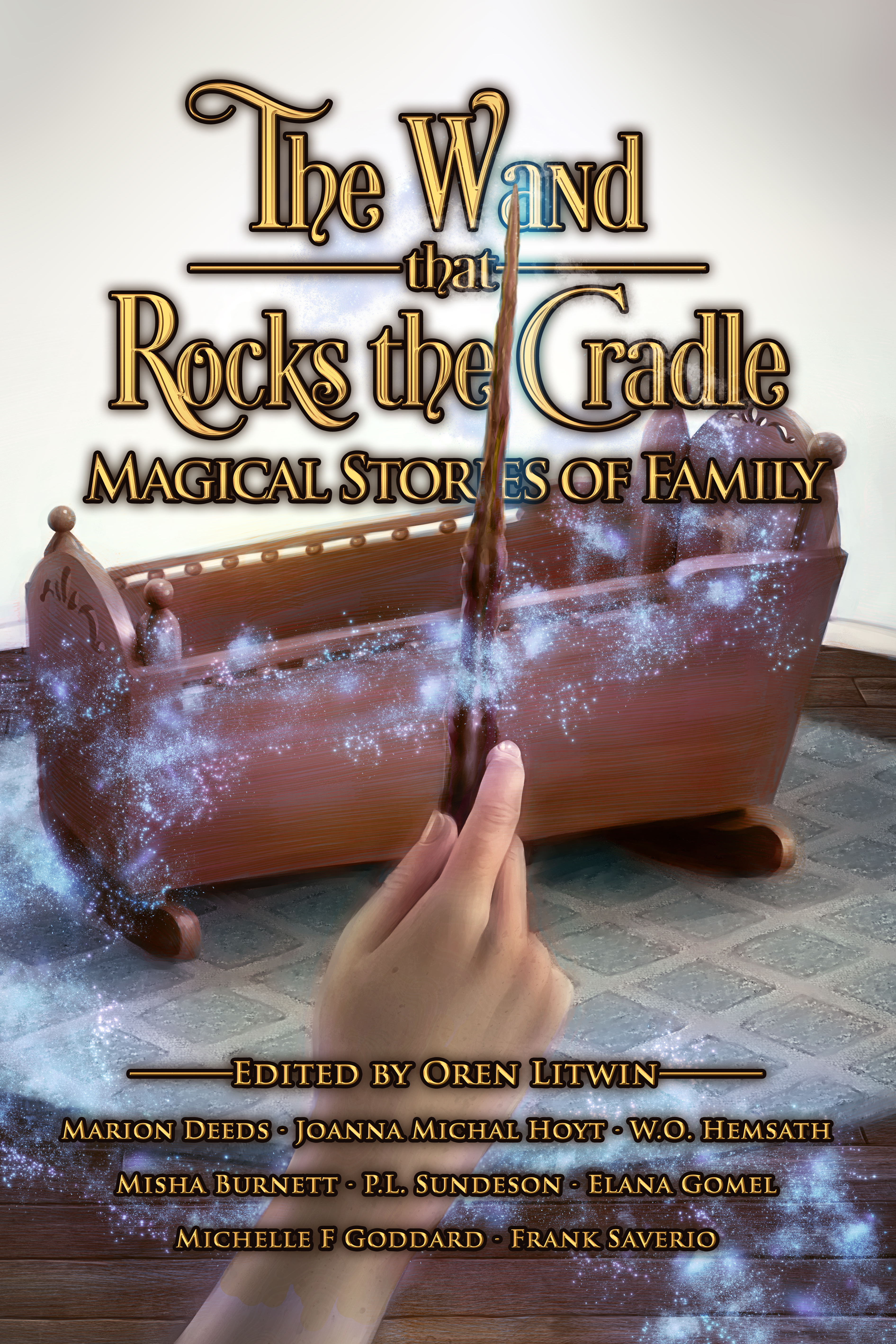
    • The Wand that Rocks the Cradle: Magical Stories of Family
    • Ye Olde Magick Shoppe
  • Politics for Worldbuilders
  • Scholarship

Building Worlds

~ If You Don't Like the Game, Change the Rules

Building Worlds

Category Archives: Writing

What is the Function of a State?

25 Sunday Jul 2021

Posted by Oren Litwin in Better Fantasy, Politics, Politics for Worldbuilders, State Formation, Writing

≈ Leave a comment

Tags

Fantasy, politics, worldbuilding, writing

When doing worldbuilding, many authors or game designers assume as a matter of course that most of the peoples in their world will be part of an organized state (roughly meaning a defined territory ruled by a centralized government, in the sense of Louis XIV’s “L’etat, c’est moi”). Any “barbarian” lands lacking organized states might be dominated by roving nomadic bandits, or some other uncultured society; and in any event these would be rare curiosities, and most of the land mass would be controlled by one state or another.

That assumption is understandable, given that almost all people alive today live in consolidated states (indeed, any regions lacking a state are today declared “failed states,” rather than simply stateless). But it should not be the default for authors. In fact, for most of human history, the majority of people lived outside of states. Organized states only tended to control cities and their immediate surroundings, with most people living in tribal or clan-based societies in lands outside of the city’s reach. And for most of human history, one’s average life expectancy was actually lower as the subject of a state than otherwise.

Even as organized governments in general gained power, the modern “Westphalian” state (one that claimed unchallenged rule over a defined territory extending well beyond city walls) was not the only way to run things. The city-state was a perfectly reasonable way to organize political life, and persisted well into the 19th century in Italy. Similarly, the Hanseatic League was a loose collection of city-states allied with each other for mutual protection and benefit, but otherwise largely self-governing.

Why then have states at all? What advantages did they have, if any? For whom? What allowed the Westphalian state to eventually take over the globe? And how can we use these concepts in our fiction?

Generally, the state is built from three things: military force, bureaucracy (or some other way to enforce laws and collect taxes), and a source of legitimacy (an ideological framework justifying the demand of the state that its subjects serve loyally—religion, or patriotism, or similar). But these need not all emerge in the same order, and the initial character of the regime may vary as a result.

What happens if the military comes first? Then you have the state as a “stationary bandit,” essentially where some thug with an army gathers a group of people under his rule, and provides some of the trappings of civilized life in exchange for squeezing them for all the taxes he can get. This might not be all bad; a smart bandit can sometimes provide a better quality of life for people under her rule than what they had before, for the selfish purpose of generating more economic growth and therefore taxable wealth. But when push comes to shove, the entire purpose of the bandit state is to aggrandize and enrich the ruler, not to benefit the ruled. Slavery is frequent, taxation is heavy, the army is frequently used to squeeze the people even harder, and the desires of the people are only an annoying consideration to be managed.

What if administration comes first? You might suppose that a self-governing community, perhaps husbanding a common-pool resource, has to deal with increasingly complex problems of project planning and resource allocation; the community develops an organized bureaucracy in response, with codified laws. Then, as the community is threatened by invaders, the community raises an army for its defense (or maybe they feel like invading their neighbors!). Then it decides that keeping the army is a good idea, and becomes a state. In such a case, most of the state’s activity will initially still be focused on resource allocation and maintenance of social order, rather than sheer coercive extraction. Ancient Egypt might be a good case of this.

What if the community’s framework for legitimacy came first? For example, in the Bible, the Israelites had lived in a stateless society for centuries, but found themselves unable to repel invading powers like the Philistines. So the people approached the prophet Samuel and demanded a king “that we also may be like all the nations; and that our king may judge us, and go out before us, and fight our battles.” Yet that king was (initially) constrained by the cultural and religious expectations that the people already had. In such a case, one might expect the king to be relatively weaker than the other cases, at least initially, and not to diverge too strongly from communal expectations.

As time passes, any state will develop aspects of all three of the above aspects. The exact mix between them will vary; and in your own fiction project, you can of course emphasize the angle that works best for your story. But states tend to develop more rapidly, and to end up exerting more power over their societies, if the nation is under persistent military threat.

So far so good; but then why the modern Westphalian state? Why bother claiming all the territory in your neighborhood, and claim the power to control the behavior of the people living in it, when it might be too expensive and troublesome to control the “badlands”? Why not exist as a city-state, and simply trade for resources with the stateless peoples living outside your grasp (as was the model for most of history)?

In part, this becomes more of a factor when international diplomacy becomes more important. If other states want to make agreements with your state, they expect you to be able to fulfill your end of the bargain; that will force you to try to control “your” territory in response. If Florin makes a peace treaty with Guilder, it would be highly embarrassing if Florinian bandits start raiding Guilder territory. Florin will have to work harder to impose law and order in “its” territory, or no other state will trust its word.

If a state is less concerned with controlling its entire territory, and only with maximizing its tax revenue, it would tend to default to a city-state model, or perhaps a network of cities dotting a largely ungoverned landscape—cities are far more efficient to control. The same would be true if the state simply lacks the power to dominate the countryside. The countryside, meanwhile, would be largely self-governing by small communities of farmers or foragers, or perhaps dominated by local gentry, crime bosses, or warlords.

In your own stories, remember that the Westphalian state is not the only model you need follow, nor is it always the best one for your story. A world of uncertain political control can be really fun to explore.

*****

(This post is part of Politics for Worldbuilders, an occasional series. Many of the previous posts in this series eventually became grist for my handbook for authors and game designers, Beyond Kings and Princesses: Governments for Worldbuilders. I am now moving my attention to the planned second book in this series, working title Tyranny for Worldbuilders. No idea when it will be finished, but it should be fun!)

How Tyrannies Use Gaslighting

07 Monday Jun 2021

Posted by Oren Litwin in Better Fantasy, Politics, Politics for Worldbuilders, Writing

≈ 1 Comment

Tags

Fantasy, gaslighting, ideology, propaganda, worldbuilding, writing

The term “gaslighting,” for people who have somehow remained blissfully unaware of the Internet’s growing fascination with the concept, is taken from the movie Gaslight. In it, the protagonist is subjected to a fiendish type of psychological torture by her evil husband, who seeks to convince her that she is insane. He does so by repeatedly lying to her, baldly, to her face, about things she knows to be otherwise—such as whether the lights in the house are at full intensity or not.

Political regimes sometimes do something similar. Vaclav Havel, the Czechoslovak dissident against Communism, famously wrote in The Power of the Powerless:

The manager of a fruit-and-vegetable shop places in his window, among the onions and carrots, the slogan: “Workers of the world, unite!” Why does he do it? What is he trying to communicate to the world? Is he genuinely enthusiastic about the idea of unity among the workers of the world? Is his enthusiasm so great that he feels an irrepressible impulse to acquaint the public with his ideals? Has he really given more than a moment’s thought to how such a unification might occur and what it would mean?

I think it can safely be assumed that the overwhelming majority of shopkeepers never think about the slogans they put in their windows, nor do they use them to express their real opinions. That poster was delivered to our greengrocer from the enterprise headquarters along with the onions and carrots. He put them all into the window simply because it has been done that way for years, because everyone does it, and because that is the way it has to be. If he were to refuse, there could be trouble. He could be reproached for not having the proper decoration in his window; someone might even accuse him of disloyalty. He does it because these things must be done if one is to get along in life. It is one of the thousands of details that guarantee him a relatively tranquil life “in harmony with society,” as they say.

…Let us take note: if the greengrocer had been instructed to display the slogan “I am afraid and therefore unquestioningly obedient;’ he would not be nearly as indifferent to its semantics, even though the statement would reflect the truth. The greengrocer would be embarrassed and ashamed to put such an unequivocal statement of his own degradation in the shop window, and quite naturally so, for he is a human being and thus has a sense of his own dignity. To overcome this complication, his expression of loyalty must take the form of a sign which, at least on its textual surface, indicates a level of disinterested conviction. It must allow the greengrocer to say, “What’s wrong with the workers of the world uniting?” Thus the sign helps the greengrocer to conceal from himself the low foundations of his obedience, at the same time concealing the low foundations of power. It hides them behind the facade of something high. And that something is ideology.

…Individuals need not believe all these mystifications, but they must behave as though they did, or they must at least tolerate them in silence, or get along well with those who work with them. For this reason, however, they must live within a lie. They need not accept the lie. It is enough for them to have accepted their life with it and in it. For by this very fact, individuals confirm the system, fulfill the system, make the system, are the system.

It was hard to select only a few paragraphs out of this brilliant, earthshaking essay. But the main points are that many regimes force their peoples to mouth slogans or profess beliefs that they know to be false. A good example is North Korea, which insisted during the rule of Kim Jong Il that he was an accomplished athlete and archer, and now similarly insists that Kim Jong Eun is similarly multitalented, against all available evidence.

If the regime could actually convince the people that these things are true, so much the better. But it is not necessary. In fact, from a certain point of view, it is better for the people to know that the things they are being made to say are lies; then, when you repeat the official line like a good subject, you are knowingly humiliating and demoralizing yourself. You are demonstrating your willingness to surrender the truth for self-preservation. And you are also making it harder for others in your position to resist, as they hear what seems to be a unanimous voice from their neighbors repeating the official ideology despite its falsity.

This goes beyond a mere “shibboleth,” a style or opinion that you profess in order to signal your affiliation with a given social group, rather than out of conviction. (For example, liking or disliking Tim Tebow.) The official line is a shibboleth of a kind, true, and functions in that way; but the falsity of the official ideology is important for demoralizing dissenters. The regime is gaslighting the populace.

This can obviously vary in intensity. From a certain point of view, any form of national identity is an ideology of this kind, at least in part, but usually relatively harmless. On the other hand, Vaclav Havel’s experience under Communism was a different beast entirely. “Because the regime is captive to its own lies, it must falsify everything. It falsifies the past. It falsifies the present, and it falsifies the future. It falsifies statistics. It pretends not to possess an omnipotent and unprincipled police apparatus. It pretends to respect human rights. It pretends to persecute no one. It pretends to fear nothing. It pretends to pretend nothing.”

In fantasy especially, many authors trying to depict a tyranny either go with a cruel regime blatantly lording it over the groaning peasants, or a regimented society of brainwashed drones. But we needn’t go to either extreme, and our setting can be more interesting if we do not. A society with an ideology that no one actually believes, but that everyone needs to pretend to believe, can provide a rich vein of conflict and thematic resonance. Sound interesting?

******

(This post is part of Politics for Worldbuilders, an occasional series. Many of the previous posts in this series eventually became grist for my handbook for authors and game designers, Beyond Kings and Princesses: Governments for Worldbuilders. I am now moving my attention to the planned second book in this series, working title Tyranny for Worldbuilders. No idea when it will be finished, but it should be fun!)

“Governments for Worldbuilders” is Coming!

24 Sunday May 2020

Posted by Oren Litwin in Better Fantasy, Lagrange Books, Politics for Worldbuilders, Writing

≈ Leave a comment

Tags

new book, worldbuilding, writing

Way back in 2013, I talked about writing a how-to guide for authors and other worldbuilders about using politics to make awesome stories. Gradually, I started posting about political topics, now helpfully collected on this page.

Last summer, I finally turned my work into a manuscript, deepening the discussions and adding new material. Since then, it’s been going through edits, layout design, and now cover design.

Now, at last, the end is in sight. Expect a cover reveal in the next week or two. I can’t tell you how excited I am!

New Release! “Bad Dreams and Broken Hearts,” by Misha Burnett

07 Thursday Nov 2019

Posted by Oren Litwin in Lagrange Books, Self-Promotion

≈ Leave a comment

Tags

hard boiled detective, misha burnett, new release, urban fantasy

So in October, Lagrange Books published an awesome hard-boiled detective fantasy collection by the incredible Misha Burnett, and for some reason WordPress wouldn’t let me post about it for weeks…

But that was then. Feast your eyes on this sweet cover:

2019-1151 Misha Burnett b01.jpg

And the book itself is even better! But don’t take my word for it. Here is a great review from Jon Mollison:

Misha’s writing snaps along with the brisk pace, terse delivery, and blank slate hero that marks all the best hard boiled works.  His understated descriptions and emotional subtlety are in display here at their finest.  For his writing alone, this book deserves a place on your shelf.

Rugar’s World is a city set in a straight up fantasy realm.  It isn’t our Earth plus magic, it is its own world with its own history and politics and cultures.  Our protagonist is a quiet American type of guy who keeps the peace in a west coast city that lies somewhere on the cultural and physical border between LA and Seattle.  City politics rears its ugly head and complicates otherwise straightforward murder investigations.  Think Bright without the heavy handed identity politics.  Or Law and Order with wands and necromancers and nations filled with golems and vampires.

Buy it today in Kindle, or in print from your favorite retailer. You’re going to love it!

NEW BOOK RELEASE: “The Wand that Rocks the Cradle: Magical Stories of Family”

09 Monday Sep 2019

Posted by Oren Litwin in Lagrange Books, Self-Promotion, Writing

≈ Leave a comment

Tags

elana gomel, fantasy anthology, Frank Saverio, Frank Zafiro, Free Kindle, Hemsath, joanna hoyt, Kindle Unlimited, Marion Deeds, Michelle Goddard, misha burnett, new release, paranormal fantasy, short story anthology, Sundeson

At last, after many long months of work and the fantastic contributions from our authors, The Wand that Rocks the Cradle: Magical Stories of Family is live on Amazon! Available in both Kindle and paperback formats for your reading pleasure. And if you’re enrolled in Kindle Unlimited, it’s included in your subscription!

This anthology celebrates the exhilarating wonders and hidden depths of family, as only fantasy can do. Featuring celebrated and award-winning authors, these stories will make you laugh, cry, and wish for more. Check it out, along with other anthologies from Lagrange Books!

coverhighres

Only a Few Hours Left for “The Wand that Rocks the Cradle”!

28 Tuesday May 2019

Posted by Oren Litwin in Lagrange Books, Self-Promotion

≈ Leave a comment

Tags

Fantasy, Kickstarter, new book, short stories, short story, short story anthology

The Kickstarter campaign for The Wand that Rocks the Cradle is about to end, and we have blown past our goal with room to spare. I can’t wait to get to work publishing these great stories!

If you were thinking of backing this anthology, now is your last chance. See you there…

The Wand that Rocks the Cradle: Author Interview with Michelle Goddard

20 Monday May 2019

Posted by Oren Litwin in Lagrange Books

≈ Leave a comment

Tags

author interview, Fantasy, Kickstarter

Thanks again for supporting The Wand that Rocks the Cradle! Today’s interview is with Michelle F Goddard, who contributed the short story “The Lake Cottage.” Enjoy!


If you had to tell someone, “If you like this person’s stories, you would like mine too,” who would you pick?

This is a heck of an opening statement to make. I’ll preface it by saying that I love exploring the extraordinary in the ordinary, doorways that open between worlds and open us to the strange or let the strange come for a visit. Authors like Neil Gaiman and Stephen King accomplish this in spades and I’d include Joss Whedon and his many television shows as well. George RR Martin has managed to bring dragons and magic into a story that is fundamentally about people and their relationship with power. I greatly admire that skill to tap into real issues while dealing with the fantastic. I try my best to explore that as well.

What attracted you to writing?

I think most, if not all writers were and are avid readers. I was one of those read at the dinner table kids, eyes riveted to the page, blind to all else. Even my mom remembers my reaction when I first readThe Lion, the Witch, and the Wardrobe, excitedly telling her all about the children and the magic wardrobe and how whenever I would find a wardrobe, I would check it thoroughly, not wanting to miss out on an opportunity for an adventure. So I suppose, as years went by I figured, if I wasn’t going to find Narnia, I’d create one myself. But truth be told, I still look at the back of wardrobes… just in case.

(Read more…)

FIRST LOOK: “The Hopeful Bodies of the Young,” by Misha Burnett

15 Wednesday May 2019

Posted by Oren Litwin in Lagrange Books

≈ Leave a comment

Tags

excerpt, Kickstarter, urban fantasy

Today, we’re giving you a look at one of the five stories in our Kickstarter-exclusive bonus bundle. The only way to receive this bundle is by pledging to this campaign at the $10 or $25+ levels; it will never be available for sale. This excerpt is from “The Hopeful Bodies of the Young,” by Misha Burnett, and takes place on a lovely night in Dracoheim. Enjoy!


[…]

The waiter handed them each a larger leather folder containing the day’s menu and withdrew as if on a greased track.

Ivor realized that he was hiding behind the menu and made an effort to put it down. Say something, he told himself.

“Your pictures don’t do you justice,” he tried.

She raised an eyebrow at that. But she was still smiling.

“Thank you, Magus,” she said impishly.

Ivor colored. “It’s not really that big a deal—” Then he stopped himself. He might as well be honest, even if it came across as conceited. “Well, actually, it is kind of a big deal. Eight years of schooling, then six years as an apprentice. I only graduated six months ago, I’m still getting used to it.”

“And you work for Blackstone-Tate,” she said. That had been in the profile he’d sent the agency.

He nodded. “Junior partner, but my name’s on the rolls. Along with about sixty others.”

(Read more…)

FIRST LOOK: “Legacy” by Joanna Hoyt

14 Tuesday May 2019

Posted by Oren Litwin in Lagrange Books

≈ Leave a comment

Tags

excerpt, Fantasy, joanna hoyt, short story anthology

Thanks again for supporting The Wand that Rocks the Cradle! Today, our excerpt is from the beginning of “Legacy,” by Joanna Hoyt. Enjoy!

Did you know that for only $5 more, you can receive a special, Kickstarter-exclusive bundle of five more excellent short stories? Tomorrow, we’ll start posting First Look excerpts of the bonus stories so you can get a taste of what could be yours…

****

May 20, 1954: California

David straightened up carefully. For a moment he let himself feel the pain in his spine and hips, the sweat sliding down his face and his back. Then he let those go and focused on Daniel, one row behind him, bent over the melon plants, his short-handled hoe moving quickly, rhythmically.

Daniel looked over as though he’d felt his father’s glance like a touch; straightened a little too fast, winced, smiled. Not the quick eager way he’d smiled when David said he was old enough to come and work. This was steadier, a little rueful and more than a little proud. David smiled back and bent to work again before Gord the crew boss could come over and shout at either of them.

He would have liked to offer his son some easier way of being a man, work that wouldn’t be hell on his joints, work that would let him marry a sweetheart and go home to her every night instead of leaving for months at a time. But that wasn’t what he had to give. And maybe, after all, there was no easy way.

(Read more…)

FIRST LOOK: “She That Was So Proud and Wild,” by Misha Burnett

12 Sunday May 2019

Posted by Oren Litwin in Lagrange Books, Writing

≈ 1 Comment

Tags

excerpt, Fantasy, first look, Kickstarter, short story anthology

Thanks for following The Wand that Rocks the Cradle! Today’s excerpt is from a story by Misha Burnett, in which a family clinging to its old ways and old magic confronts a prodigal son who wants to live his own life. Enjoy!

****

At the old fuel station off the highway Jenni went in to get some snacks for the road.

Marc stayed with the truck and had the attendant fill the two jerry cans he kept in the back as well as the truck’s tank.

“Headed up country?” the attendant asked, using an expression Marc hadn’t heard in years.

Marc nodded. “I’ve got folk in Carne Shant.”

“Not as bad as it used to be,” the attendant observed. “There’s stations up in the delves now.”

“I’d rather be prepared,” Marc said. “Better to spend wisdom than earn it.”

The attendant grinned at that. “Old church?” he asked.

Marc shook his head. “Not anymore.”

Jenni came back with warm fudge wrapped in waxed paper and bottles of ginger soda.

Marc paid the attendant as Jenni climbed in, then waved as he drove off.

“Friendly people,” Jenni said.

“They can be,” Marc observed.

“Funny thing…” Jenni began, giving Marc a sidelong glance, “There was a sign at the register about not taking coins unless they’re rolled. The last place we stopped had the same sign. What’s that all about?”

“Old church,” Marc said absently. “They don’t use paper money.”

(Read more…)

← Older posts
Newer posts →

Recent Posts

  • Fortune-Cookie Spiritualism and “Kung Fu Panda 4”
  • Kickstarter Live for Ben Franklin’s “Paper-Money”!
  • Annotated Ben Franklin: First Draft Complete!
  • New Project: Annotated Ben Franklin!
  • More on Cities, Commerce, and Braudel

Meta

  • Create account
  • Log in
  • Entries feed
  • Comments feed
  • WordPress.com

Not a fan of RSS? Enter your email address to follow this blog and receive notifications of new posts by email.

Join 228 other subscribers

Archives

  • September 2026
  • August 2026
  • July 2026
  • April 2026
  • January 2026
  • December 2025
  • November 2025
  • September 2025
  • July 2025
  • May 2025
  • February 2025
  • January 2025
  • September 2024
  • July 2024
  • November 2023
  • October 2023
  • September 2023
  • July 2023
  • June 2023
  • May 2023
  • April 2023
  • March 2023
  • February 2023
  • January 2023
  • December 2022
  • November 2022
  • October 2022
  • August 2022
  • July 2022
  • June 2022
  • May 2022
  • April 2022
  • March 2022
  • January 2022
  • December 2021
  • November 2021
  • August 2021
  • July 2021
  • June 2021
  • June 2020
  • May 2020
  • November 2019
  • September 2019
  • August 2019
  • May 2019
  • April 2019
  • March 2019
  • February 2019
  • January 2019
  • December 2018
  • October 2018
  • August 2018
  • July 2018
  • June 2018
  • May 2018
  • April 2018
  • March 2018
  • February 2018
  • July 2017
  • February 2017
  • December 2016
  • December 2015
  • December 2014
  • November 2013
  • August 2013
  • May 2013
  • April 2013
  • January 2013
  • November 2012
  • October 2012
  • September 2012
  • August 2012
  • July 2012
  • June 2012
  • May 2012

Categories

  • Better Fantasy
  • Credit
  • Economics
  • Education
  • Finance
  • Health
  • History
  • Homeschooling
  • Investing
  • Lagrange Books
  • Manifesto
  • Military
  • Movies
  • Music
  • NaNoWriMo
  • Politics
  • Politics for Worldbuilders
  • Real Estate
  • Revolution
  • Self-Actualization
  • Self-Promotion
  • State Formation
  • Uncategorized
  • War
  • Weapons
  • Writing
Links on this site may lead to products for which the owner may receive compensation.

Website Powered by WordPress.com.

Privacy & Cookies: This site uses cookies. By continuing to use this website, you agree to their use.
To find out more, including how to control cookies, see here: Cookie Policy
  • Subscribe Subscribed
    Building Worlds
    Join 132 other subscribers

    Have a WordPress.com account? Log in now.

  • Building Worlds
    View site in Reader
    Manage subscriptionsSign upLog in
    Report this content
    Collapse this bar
Loading Comments...