• About Oren
  • Edited Anthologies
    • The Odds Are Against Us
  • Fiction by Oren Litwin
  • Lagrange Books
    • Calls for Submissions
      • The Future of Audience-Driven Writing
      • Archives
        • Call for Submissions— “Asteroids” Science-Fiction Anthology
        • Call for Submissions— “Family” Fantasy Anthology
        • Call for Submissions—Military Fiction Anthology
        • Call for Submissions—”Ye Olde Magick Shoppe” Fantasy Anthology
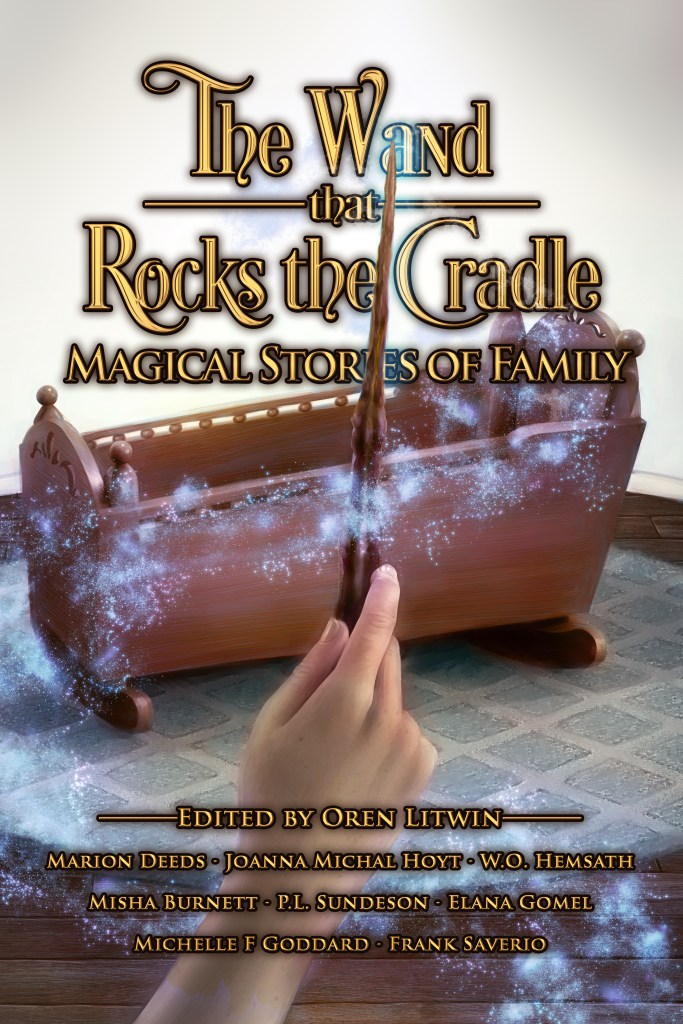
    • The Wand that Rocks the Cradle: Magical Stories of Family
    • Ye Olde Magick Shoppe
  • Politics for Worldbuilders
  • Scholarship

Building Worlds

~ If You Don't Like the Game, Change the Rules

Building Worlds

Category Archives: Uncategorized

An Aside on Early Disney

28 Sunday Sep 2025

Posted by Oren Litwin in Uncategorized

≈ Leave a comment

Tags

Disney, Peter Pan

Somehow, I had managed to go through my entire childhood without watching the 1953 Disney version of Peter Pan (though I repeatedly watched the Mary Martin musical stageplay version, and I also listened to one of those abridged audiobook versions of the Disney movie on cassette tape). Last night was the first time I watched the Disney version all the way through.

It was generally charming, even with some of the typical early Disney slapstick via the Lost Boys. We were generally having a good time.

And then came the “Injun” sequence.

…

I’m not saying that the Wounded Knee occupation in 1973 was a good idea—but I understand.

2025 Next Generation Indie Book Award Finalist, You Say?

14 Wednesday May 2025

Posted by Oren Litwin in Uncategorized

≈ Leave a comment

So, the wonderful Ron Farina called me out of the blue to report that his book Sacrifice: The Final Chapter had just been chosen as a finalist in the “Military” category of the Next Generation Indie Book Awards. And apparently, Ron was kind enough to submit me as the editor.

First off, I should note that I was only one of the editors. Tremendous work on the manuscript was done by Gayle Statman, technical nonfiction and fiction editor extraordinaire, and I have written the Indie Book Award folks to have them correct the record and include Gayle. Hopefully they do so.

Working with Ron on his books has been one of the most satisfying and meaningful experiences of my career. I am grateful for the opportunity and very proud that we were able to bring his works to fruition. Thanks as well to all the many authors who sent in their stories to the fiction anthologies I edited over the years (primarily through my imprint Lagrange Books) and helped me hone my editing craft.

I am a self-taught editor, largely by reading lots and lots of excellent prose (and some that is not so excellent) and developing an ear for what works. To all those authors from Tolkien to Heinlein to Lloyd Alexander and many, many more, I thank you for the beauty and joy you brought into the world.

(Maybe I should start up another anthology. It’s been long enough!)

(Crossposted to my Substack.)

May Her Memory Be for a Blessing: Holly Lisle

09 Monday Sep 2024

Posted by Oren Litwin in Uncategorized

≈ Leave a comment

Holly Lisle, prolific writer and teacher of writing, died of cancer late last month. I only just heard this morning.

I only knew Holly from her writing courses, and our email correspondence when she helped me workshop a novel draft. But she was fierce, principled, determined, and blindingly lucid. Holly enriched many lives, and the world is poorer for her loss.

May her family be comforted.

“Governments for Worldbuilders” is Here!

18 Thursday Jun 2020

Posted by Oren Litwin in Uncategorized

≈ Leave a comment

I know I just said that my publishing-focused stuff is shifting to the Lagrange Books site. But for my own book, I’ll make an exception—especially when it’s a book that is at the heart of what this blog is about.

At long last, the book that’s been percolating for over seven years is done! Readers of this blog have followed along as we discussed how authors can use concepts from politics in their work. And now, Book One of the Politics for Worldbuilders series is complete and available for purchase! Check it out!

A Quick Thought on Microaggressions

14 Sunday Jun 2020

Posted by Oren Litwin in Uncategorized

≈ Leave a comment

[A meta-comment first: I’m going to be transitioning a lot of the Lagrange Books stuff over to LB’s dedicated page, and refocusing this site on my own personal work and thoughts. It’s been a while since I’ve felt free to write my own stuff just because!]

I’d always been leery of the term “microaggression.” Not because I think the meaning of the term was silly; I’ve experienced it often enough in my own life to know otherwise. But the term itself, semantically, seemed to argue for too much. “Aggression” involves deliberate harm, whereas microaggressions are often unintentional, and sometimes even unnoticed by the recipient until much later in the day. Worse, “aggression” is something that justifies a violent response (something I’ve spent much of my scholarly life studying). Does a microaggression justify a micro-violent response? What does that even mean?

And what does “microaggression” add to perfectly good existing concepts like thoughtlessness, rudeness, misspeaking, or the like?

Recently, however, I had a personal experience that gave me more insight into what “microaggression” could mean, and what it could justify. Typically when I experience one of these, I tend to shrug it off; the speaker is not meaning to offend, and getting into a whole discussion would derail the conversation. However, the most recent event was actually in the middle of a professional class on microaggressions! I thought the context justified correcting the misspeaking.

The experience of doing so was illuminating. Speaking up felt like it violated strong social norms against putting people on the spot and creating conflict where no apparent conflict existed. And yet I felt I was justified in speaking up. This, it seemed to me, helped explain what calling something a “microaggression” accomplishes.

Putting it into just-war terms, correcting a microaggression is a justified response to the microaggression, even though it tends to overstep our usual social boundaries—but as with war, a proper response needs to be proportional. The offense was unintentional and almost harmless; the mere fact of a microaggression did not permit me to be actually rude in my response, or hurtful, or to do harm. The response had to be tactful, to acknowledge the lack of malice in the microaggression.

I still do not like the term “microaggression” because of the semantics around its use. In particular, I find abhorrent the way in which a motivated few have used the act of pointing out  microaggressions as a social weapon, calling for shame and ostracism of the offender. But I can at least justify the term, and use it carefully until I find a better one.

In a nutshell, receiving a microaggression entitles you to respond with a single “well ackshually“!

Quote

New Sci-Fi Anthology Coming Soon… — Lagrange Books

14 Sunday Jun 2020

Posted by Oren Litwin in Uncategorized

≈ Leave a comment

Long ago, Lagrange did a call for submissions for science-fiction short stories, with a theme of “asteroids.” Some fantastic authors responded with stories that were fun, provocative, insightful, or gloriously cheesy. An accumulation of other projects pushed this one to the back burner for a while, but the time has finally come for these stories […]

via New Sci-Fi Anthology Coming Soon… — Lagrange Books

The Wand that Rocks the Cradle: a Fantasy Anthology Coming in September!

16 Friday Aug 2019

Posted by Oren Litwin in Uncategorized

≈ 1 Comment

I’ve been sadly quiet since May, mostly because I’ve been trying to juggle several different projects. First off, the long-running “Politics for Worldbuilders” project is finally being compiled into a book series; the first volume is nearing completion. Second, Lagrange Books is getting ready to publish our first single-author book, by fantastic author Misha Burnett. More news on that soon…

But it’s the third project, which was actually the first project, that I want to tell you about.

Back in May, I was spamming everyone with the Kickstarter project for The Wand that Rocks the Cradle, our fantasy anthology on magical families. Since we met our funding goal, I’ve been working hard to finish the editing, coordinate with our cover designer (the talented Melody Knighton), and produce the actual book. And now, behold:

We are now taking pre-orders on Amazon for the Kindle edition, with a special pre-release price of $2.99; once we launch in September the price will go up to $3.99.

(But there’s another way you can read it for free… If you sign up for the Lagrange Books mailing list, you can join the Advance Reader Team—you’ll get access to prerelease copies of Lagrange publications, in exchange for leaving totally honest reviews on Amazon, Goodreads, or other online sites. This is a totally optional, but totally fun, way to be involved.)

We’re all incredibly excited for this release. And once you start reading, you will be too!


Emotional Whiplash

22 Wednesday May 2019

Posted by Oren Litwin in Uncategorized

≈ 2 Comments

Here’s a brief sketch of my internal monologue during the Kickstarter project for The Wand that Rocks the Cradle, now about five days before the deadline:

Day 1: Oh my God we just got over 25% in one day that’s amazing!!

Day 3: Oh my God we just crossed 50%! Holy cow holy cow holy cow! We’re going to get so many backers and then we can do an audiobook and interior illustrations and all the authors get paid more than pennies and it’s going to be amazing!!

Day 7: Okay, slowing down a bit, but we still hit 70%, not too bad, not too bad!

Day 13: Okay, we’re stalled at 75%… do we need more PR? Maybe offer a cool new backer reward? Something?

Day 16: Awright, back in business! Not exactly rolling in dough, but good solid progress. Up to 88%, going great. We’ll get there.

Day 22: Um, hello? Anyone there?

Day 23: Okay, this cannot be the end! Time for some shameless begging…

Day 24: Okay, shameless begging got us a few bucks, up to 92%. Maybe update the graphic? Maybe I was spamming people too often with updates? Maybe the updates weren’t interesting enough? We’ve got a bunch of followers who haven’t contributed yet, maybe some of them will chip in right at the end?

Day 25: Seriously? Less than $40 left? Aargh! That’s like a cup of coffee a day or something! How can it be this hard?? Come on, Kickstarter, do your thing!

****

In the meanwhile, I’ve been scoping out a huge number of cover artists in different places online. We have options. The frustrating thing is that it’s hard to get a sense of what will attract our audience in particular; the emotional tone of this anthology is very different from my usual. I’d call it “wistful,” “poignant,” “tender” at times, with a few darker and lighter bits thrown in for spice. But the design aesthetic for a lot of cover artists these days seems to be “glowy action chick with a low-cut dress and werewolves,” which might not be where we want to go. Except, what if it sells anyway?

The marketplace is a fickle temptress, yea verily!

Does Nobody Watch The Classics Anymore?

13 Monday May 2019

Posted by Oren Litwin in Uncategorized

≈ 4 Comments

Tags

rothchild

We interrupt our regularly-scheduled shameless self-promotion…

Setting aside the propriety of casting Mel Gibson in a movie called “Rothchild,” which seems to be all anyone is discussing about it, why is it that not a single article I’ve read so far notices that it’s almost certainly a remake of an old classic?

Here’s the plot summary from The Hollywood Reporter:

The black comedy will center on Becket Rothchild (Shia LaBeouf) — the bastard child of a mother, who in eloping with a jazz musician was cast out from the Rothchild family and its vast fortune — who was never given a fair lot in life. All grown up and armed with charisma, intelligence and a flair for opportunity, it does not take long for Becket to fully grasp the immense gap between his situation and the richest 1 percent, which should be his birthright. He has a plan.

There are precisely nine Rothchild family members who stand between him and his fortune, including Whitelaw (Gibson), his sinister grandfather. How hard could it be for them each to meet with an “accident”? With the unique advantage of being unknown to any of them, Becket penetrates the weird and twisted lives of his super-rich kin amongst frat boys, hipster artists and reality TV stars. The only thing that threatens to get in the way is love, both old and new.

Did you recognize it? Here’s a hint: Alec Guinness.

Not yet? How about: Alec Guinness, Alec Guinness, Alec Guinness, Alec Guinness, Alec Guinness, Alec Guinness, Alec Guinness, Alec Guinness, and Alec Guinness.

The movie I’m referring to is Kind Hearts and Coronets, from 1949. In many respects its plot matches the above outline precisely, making allowances for an updated setting. The biggest clue is that there are precisely nine family members to bump off, as in the 1949 film. (Apparently the film was loosely adapted into a Broadway show in 2013, A Gentleman’s Guide to Love and Murder. None of the discussions of “Rothchild” mention that one either.)

Interestingly, in one sense “Rothchild” might be more faithful to Kind Hearts’s original source material—a 1907 novel titled Israel Rank: the Autobiography of a Criminal, in which the titular criminal is half-Jewish and generally enacts the usual anti-Semitic stereotypes of Jews.

I doubt I’ll see “Rothchild,” mostly because I don’t trust Hollywood to satirize “the 1%” without plunging into boring ham-handed preachy sanctimony. But it’s alarming that the classic movie it seems to have been ripped off of has apparently sunk without a trace, forgotten by the very reporters who claim to know movies.

(I suppose this is one more example of how institutional memory is being destroyed across industries by young know-it-alls who imagine that no one older than they knows anything worth learning. One of the most frightening things about Washington DC is that much of the government is run by twenty-something staffers who are ignorant and easily manipulated by outside interests.)

On the bright side, those of us who appreciate the classics have an opportunity to sell old wine in new bottles. What other classic movies or books are out there, waiting for a facelift in the hands of a determined modern novelist?

Who Rules? Part Two—The Nobility

17 Sunday Jun 2018

Posted by Oren Litwin in Better Fantasy, Politics, Politics for Worldbuilders, State Formation, Uncategorized, Writing

≈ 2 Comments

Tags

government, worldbuilding, writing

(This post is part of Politics for Worldbuilders, an occasional series.)

Some time ago, we mentioned the four potential ruling groups laid out by Samuel Finer, and discussed the first “polity” (or regime type), the Palace Polity. Now, let us discuss the second “pure” polity—the Nobility—as well as our first hybrid polity, the Palace/Nobility.

What makes the Nobility unique is not that they are powerful or influential. In any polity there will be influential figures, even in the Palace. But for a group of powerful people to be considered a Nobility in the sense Finer means, they must first have autonomy from the central government, and from each other. Aristocrats attached to the Palace, and deriving their power from it, may be noble in the class system of their society; but Finer would not consider them “Nobility,” merely courtiers (typically the rivals of the autonomous Nobility). Nobility are able to resist the central government, because they control their own power resources—land most frequently, but also the people on that land.

(One might consider a vast fortune to count as a power resource as well, though historical nobles usually had land as the source of their power; but money by itself does not yield power if the rich are vulnerable to state coercion. Furthermore, a state with enough money to make large fortunes possible is unlikely to have autonomous nobles; the central government is usually strong enough to force some sort of dependent relationship, often in the form of a corporatist system. Bill Gates cannot simply decide to stop paying his taxes. It was the historical lack of coin, and thus the need to pay retainers in land grants, that typically led to the emergence of nobility in the first place. Still, one can imagine other potential sources of autonomous power.)

Second, a Noble is distinguished by his absolute control over those in his domain. No higher authority, no central government, may interfere with a Noble’s lands or vassals. Not even other Nobles, which is helps to explain why nobles were constantly occupied with feuds and intrigues against each other. On the other hand, Nobility could often arrange themselves hierarchically or even fractally, so that many petty lords could be vassals of a more powerful lord, who in turn would be one of the several vassals of an even more powerful lord, all the way until you reach a handful of great nobles who dominate their politics. Finer gives the example of Bakufu-era Japan, with its samurai class aligned under the daimyos, in ever-shifting coalitions and factions.

A pure Nobility polity is extremely rare and not very stable. To qualify, it would have to lack a strong central government entirely. But the nobles would still have to be bound together in some form, or else it would not be a single polity but a patchwork of smaller principalities. The only example that Finer locates is that of 16th-17th century Poland, where the great nobles sat in a council together, under the nominal rulership of a king who nevertheless was nearly always controlled by the noble council. Such polities would tend to either coalesce into a stronger central regime over time, or else fragment entirely.

More commonly, strong nobles coexisted uneasily with a central Palace regime, leading to the Palace/Nobility polity (naturally). This was the situation during the Feudal era of Europe, in which a nascent centralized government had to deal with lesser nobles who could stand apart from the Crown, and on occasion present a real threat to its power.

If the independent nobility is relatively weak and more easily controlled by the Palace, then while Nobles have their ancient privileges, those privileges might be closely circumscribed. Palace administrative structures may be imperfect, so local control depends on the cooperation of the nobles, but the nobles themselves would have small armed forces if any; they pose little threat to the Palace in the long run. And unless there is a dramatic change in the balance of power, the Nobles’ position will erode over time. Perhaps the independent nobles are being challenged by other “court nobles,” whose prestige depends on the largesse of the Palace alone.

If the central monarch faces a powerful set of nobles with strong militaries of their own, he or she must scramble to keep on top of them via careful alliances and shrewd politicking or risk losing power, or being made nearly irrelevant. Think of the early French kings, or of King John of England (who was forced to sign the Magna Carta by an alliance of barons). The king remains powerful in his own right; otherwise, if the king were a mere figurehead or first among equals, we would be left with a pure Nobility polity as in the case of Poland. But the nobles are strong enough collectively to restrain the king’s power or even to bring him down, if they ever manage to put aside their own rivalries and oppose him as one.

This circumstance can have several long-term outcomes. In the case of England, the rights that the nobility extracted from the king (the Magna Carta) laid the groundwork for the later English experiment in broad political rights, the forerunner of the more explicit American political rights that created the modern liberal-democratic society. That did not happen in France, where the nobles focused not on rights but on privileges—chiefly, the privilege of taxing the populace. As a result, even when the French monarchy grew in strength, it still had to depend on tax-farming for revenue; the resulting abuses of the people were a key factor leading to the French Revolution.

For a weak ruler to strengthen his position is a long, perhaps generational, project. It took the Capetian kings of France hundreds of years to slowly, patiently, methodically chip away at the power of the nobility, and they were never assured of ultimate success. The same could be said of the English kings, who suffered periodic overthrow and wars of succession. A strong nobility can defend its own position quite effectively; still, the king has the advantages of a central political position and the ability to divide and conquer, given the opportunity.

A final possibility is that a weak Palace can strengthen to the point that the polity becomes evenly balanced. Or, a previously powerful Palace can have its position diminished so that the nobles reach parity. In either event, such a Palace/Nobility polity features an unstable, delicate balance between each side, so that the future trajectory of the system could go in either direction.

For authors, opportunities for conflict abound. Independent nobles can scheme against each other or even make open war, the king can intrigue with one faction against another, or they could intrigue against the king or rebel; country aristocracy could come into conflict with dependent courtiers, each side resenting the privileges of the other. Feuds between nobles and a weakened king could risk fracturing the polity altogether, leaving it open to outside invasion; or the threat of such invasion could be exploited by the Palace to augment its own power and force the nobles in line. If court politics is your thing, then the possibilities should make you downright giddy!

← Older posts

Recent Posts

  • What Went Wrong in Kung Fu Panda 2
  • Johnny Cash and the Art of Adaptation
  • An Aside on Early Disney
  • Different Types of Federalism
  • 2025 Next Generation Indie Book Award Finalist, You Say?

Meta

  • Create account
  • Log in
  • Entries feed
  • Comments feed
  • WordPress.com

Not a fan of RSS? Enter your email address to follow this blog and receive notifications of new posts by email.

Join 225 other subscribers

Archives

  • December 2025
  • November 2025
  • September 2025
  • July 2025
  • May 2025
  • February 2025
  • January 2025
  • September 2024
  • July 2024
  • November 2023
  • October 2023
  • September 2023
  • July 2023
  • June 2023
  • May 2023
  • April 2023
  • March 2023
  • February 2023
  • January 2023
  • December 2022
  • November 2022
  • October 2022
  • August 2022
  • July 2022
  • June 2022
  • May 2022
  • April 2022
  • March 2022
  • January 2022
  • December 2021
  • November 2021
  • August 2021
  • July 2021
  • June 2021
  • June 2020
  • May 2020
  • November 2019
  • September 2019
  • August 2019
  • May 2019
  • April 2019
  • March 2019
  • February 2019
  • January 2019
  • December 2018
  • October 2018
  • August 2018
  • July 2018
  • June 2018
  • May 2018
  • April 2018
  • March 2018
  • February 2018
  • July 2017
  • February 2017
  • December 2016
  • December 2015
  • December 2014
  • November 2013
  • August 2013
  • May 2013
  • April 2013
  • January 2013
  • November 2012
  • October 2012
  • September 2012
  • August 2012
  • July 2012
  • June 2012
  • May 2012

Categories

  • Better Fantasy
  • Credit
  • Economics
  • Education
  • Finance
  • Health
  • History
  • Homeschooling
  • Investing
  • Lagrange Books
  • Manifesto
  • Military
  • Movies
  • Music
  • NaNoWriMo
  • Politics
  • Politics for Worldbuilders
  • Real Estate
  • Revolution
  • Self-Actualization
  • Self-Promotion
  • State Formation
  • Uncategorized
  • War
  • Weapons
  • Writing
Links on this site may lead to products for which the owner may receive compensation.

Website Powered by WordPress.com.

Privacy & Cookies: This site uses cookies. By continuing to use this website, you agree to their use.
To find out more, including how to control cookies, see here: Cookie Policy
  • Subscribe Subscribed
    • Building Worlds
    • Join 132 other subscribers
    • Already have a WordPress.com account? Log in now.
    • Building Worlds
    • Subscribe Subscribed
    • Sign up
    • Log in
    • Report this content
    • View site in Reader
    • Manage subscriptions
    • Collapse this bar
 

Loading Comments...