• About Oren
  • Edited Anthologies
    • The Odds Are Against Us
  • Fiction by Oren Litwin
  • Lagrange Books
    • Calls for Submissions
      • The Future of Audience-Driven Writing
      • Archives
        • Call for Submissions— “Asteroids” Science-Fiction Anthology
        • Call for Submissions— “Family” Fantasy Anthology
        • Call for Submissions—Military Fiction Anthology
        • Call for Submissions—”Ye Olde Magick Shoppe” Fantasy Anthology
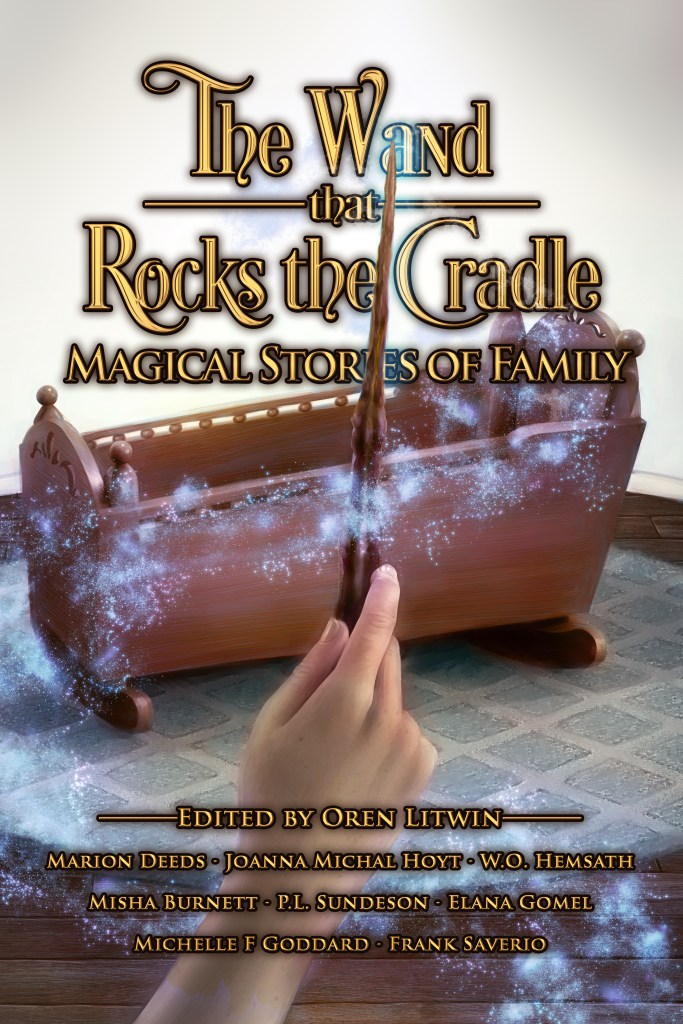
    • The Wand that Rocks the Cradle: Magical Stories of Family
    • Ye Olde Magick Shoppe
  • Politics for Worldbuilders
  • Scholarship

Building Worlds

~ If You Don't Like the Game, Change the Rules

Building Worlds

Author Archives: Oren Litwin

How Tyrannies Use Gaslighting

07 Monday Jun 2021

Posted by Oren Litwin in Better Fantasy, Politics, Politics for Worldbuilders, Writing

≈ 1 Comment

Tags

Fantasy, gaslighting, ideology, propaganda, worldbuilding, writing

The term “gaslighting,” for people who have somehow remained blissfully unaware of the Internet’s growing fascination with the concept, is taken from the movie Gaslight. In it, the protagonist is subjected to a fiendish type of psychological torture by her evil husband, who seeks to convince her that she is insane. He does so by repeatedly lying to her, baldly, to her face, about things she knows to be otherwise—such as whether the lights in the house are at full intensity or not.

Political regimes sometimes do something similar. Vaclav Havel, the Czechoslovak dissident against Communism, famously wrote in The Power of the Powerless:

The manager of a fruit-and-vegetable shop places in his window, among the onions and carrots, the slogan: “Workers of the world, unite!” Why does he do it? What is he trying to communicate to the world? Is he genuinely enthusiastic about the idea of unity among the workers of the world? Is his enthusiasm so great that he feels an irrepressible impulse to acquaint the public with his ideals? Has he really given more than a moment’s thought to how such a unification might occur and what it would mean?

I think it can safely be assumed that the overwhelming majority of shopkeepers never think about the slogans they put in their windows, nor do they use them to express their real opinions. That poster was delivered to our greengrocer from the enterprise headquarters along with the onions and carrots. He put them all into the window simply because it has been done that way for years, because everyone does it, and because that is the way it has to be. If he were to refuse, there could be trouble. He could be reproached for not having the proper decoration in his window; someone might even accuse him of disloyalty. He does it because these things must be done if one is to get along in life. It is one of the thousands of details that guarantee him a relatively tranquil life “in harmony with society,” as they say.

…Let us take note: if the greengrocer had been instructed to display the slogan “I am afraid and therefore unquestioningly obedient;’ he would not be nearly as indifferent to its semantics, even though the statement would reflect the truth. The greengrocer would be embarrassed and ashamed to put such an unequivocal statement of his own degradation in the shop window, and quite naturally so, for he is a human being and thus has a sense of his own dignity. To overcome this complication, his expression of loyalty must take the form of a sign which, at least on its textual surface, indicates a level of disinterested conviction. It must allow the greengrocer to say, “What’s wrong with the workers of the world uniting?” Thus the sign helps the greengrocer to conceal from himself the low foundations of his obedience, at the same time concealing the low foundations of power. It hides them behind the facade of something high. And that something is ideology.

…Individuals need not believe all these mystifications, but they must behave as though they did, or they must at least tolerate them in silence, or get along well with those who work with them. For this reason, however, they must live within a lie. They need not accept the lie. It is enough for them to have accepted their life with it and in it. For by this very fact, individuals confirm the system, fulfill the system, make the system, are the system.

It was hard to select only a few paragraphs out of this brilliant, earthshaking essay. But the main points are that many regimes force their peoples to mouth slogans or profess beliefs that they know to be false. A good example is North Korea, which insisted during the rule of Kim Jong Il that he was an accomplished athlete and archer, and now similarly insists that Kim Jong Eun is similarly multitalented, against all available evidence.

If the regime could actually convince the people that these things are true, so much the better. But it is not necessary. In fact, from a certain point of view, it is better for the people to know that the things they are being made to say are lies; then, when you repeat the official line like a good subject, you are knowingly humiliating and demoralizing yourself. You are demonstrating your willingness to surrender the truth for self-preservation. And you are also making it harder for others in your position to resist, as they hear what seems to be a unanimous voice from their neighbors repeating the official ideology despite its falsity.

This goes beyond a mere “shibboleth,” a style or opinion that you profess in order to signal your affiliation with a given social group, rather than out of conviction. (For example, liking or disliking Tim Tebow.) The official line is a shibboleth of a kind, true, and functions in that way; but the falsity of the official ideology is important for demoralizing dissenters. The regime is gaslighting the populace.

This can obviously vary in intensity. From a certain point of view, any form of national identity is an ideology of this kind, at least in part, but usually relatively harmless. On the other hand, Vaclav Havel’s experience under Communism was a different beast entirely. “Because the regime is captive to its own lies, it must falsify everything. It falsifies the past. It falsifies the present, and it falsifies the future. It falsifies statistics. It pretends not to possess an omnipotent and unprincipled police apparatus. It pretends to respect human rights. It pretends to persecute no one. It pretends to fear nothing. It pretends to pretend nothing.”

In fantasy especially, many authors trying to depict a tyranny either go with a cruel regime blatantly lording it over the groaning peasants, or a regimented society of brainwashed drones. But we needn’t go to either extreme, and our setting can be more interesting if we do not. A society with an ideology that no one actually believes, but that everyone needs to pretend to believe, can provide a rich vein of conflict and thematic resonance. Sound interesting?

******

(This post is part of Politics for Worldbuilders, an occasional series. Many of the previous posts in this series eventually became grist for my handbook for authors and game designers, Beyond Kings and Princesses: Governments for Worldbuilders. I am now moving my attention to the planned second book in this series, working title Tyranny for Worldbuilders. No idea when it will be finished, but it should be fun!)

“Governments for Worldbuilders” is Here!

18 Thursday Jun 2020

Posted by Oren Litwin in Uncategorized

≈ Leave a comment

I know I just said that my publishing-focused stuff is shifting to the Lagrange Books site. But for my own book, I’ll make an exception—especially when it’s a book that is at the heart of what this blog is about.

At long last, the book that’s been percolating for over seven years is done! Readers of this blog have followed along as we discussed how authors can use concepts from politics in their work. And now, Book One of the Politics for Worldbuilders series is complete and available for purchase! Check it out!

A Quick Thought on Microaggressions

14 Sunday Jun 2020

Posted by Oren Litwin in Uncategorized

≈ Leave a comment

[A meta-comment first: I’m going to be transitioning a lot of the Lagrange Books stuff over to LB’s dedicated page, and refocusing this site on my own personal work and thoughts. It’s been a while since I’ve felt free to write my own stuff just because!]

I’d always been leery of the term “microaggression.” Not because I think the meaning of the term was silly; I’ve experienced it often enough in my own life to know otherwise. But the term itself, semantically, seemed to argue for too much. “Aggression” involves deliberate harm, whereas microaggressions are often unintentional, and sometimes even unnoticed by the recipient until much later in the day. Worse, “aggression” is something that justifies a violent response (something I’ve spent much of my scholarly life studying). Does a microaggression justify a micro-violent response? What does that even mean?

And what does “microaggression” add to perfectly good existing concepts like thoughtlessness, rudeness, misspeaking, or the like?

Recently, however, I had a personal experience that gave me more insight into what “microaggression” could mean, and what it could justify. Typically when I experience one of these, I tend to shrug it off; the speaker is not meaning to offend, and getting into a whole discussion would derail the conversation. However, the most recent event was actually in the middle of a professional class on microaggressions! I thought the context justified correcting the misspeaking.

The experience of doing so was illuminating. Speaking up felt like it violated strong social norms against putting people on the spot and creating conflict where no apparent conflict existed. And yet I felt I was justified in speaking up. This, it seemed to me, helped explain what calling something a “microaggression” accomplishes.

Putting it into just-war terms, correcting a microaggression is a justified response to the microaggression, even though it tends to overstep our usual social boundaries—but as with war, a proper response needs to be proportional. The offense was unintentional and almost harmless; the mere fact of a microaggression did not permit me to be actually rude in my response, or hurtful, or to do harm. The response had to be tactful, to acknowledge the lack of malice in the microaggression.

I still do not like the term “microaggression” because of the semantics around its use. In particular, I find abhorrent the way in which a motivated few have used the act of pointing out  microaggressions as a social weapon, calling for shame and ostracism of the offender. But I can at least justify the term, and use it carefully until I find a better one.

In a nutshell, receiving a microaggression entitles you to respond with a single “well ackshually“!

Quote

New Sci-Fi Anthology Coming Soon… — Lagrange Books

14 Sunday Jun 2020

Posted by Oren Litwin in Uncategorized

≈ Leave a comment

Long ago, Lagrange did a call for submissions for science-fiction short stories, with a theme of “asteroids.” Some fantastic authors responded with stories that were fun, provocative, insightful, or gloriously cheesy. An accumulation of other projects pushed this one to the back burner for a while, but the time has finally come for these stories […]

via New Sci-Fi Anthology Coming Soon… — Lagrange Books

“Governments for Worldbuilders” is Coming!

24 Sunday May 2020

Posted by Oren Litwin in Better Fantasy, Lagrange Books, Politics for Worldbuilders, Writing

≈ Leave a comment

Tags

new book, worldbuilding, writing

Way back in 2013, I talked about writing a how-to guide for authors and other worldbuilders about using politics to make awesome stories. Gradually, I started posting about political topics, now helpfully collected on this page.

Last summer, I finally turned my work into a manuscript, deepening the discussions and adding new material. Since then, it’s been going through edits, layout design, and now cover design.

Now, at last, the end is in sight. Expect a cover reveal in the next week or two. I can’t tell you how excited I am!

New Release! “Bad Dreams and Broken Hearts,” by Misha Burnett

07 Thursday Nov 2019

Posted by Oren Litwin in Lagrange Books, Self-Promotion

≈ Leave a comment

Tags

hard boiled detective, misha burnett, new release, urban fantasy

So in October, Lagrange Books published an awesome hard-boiled detective fantasy collection by the incredible Misha Burnett, and for some reason WordPress wouldn’t let me post about it for weeks…

But that was then. Feast your eyes on this sweet cover:

2019-1151 Misha Burnett b01.jpg

And the book itself is even better! But don’t take my word for it. Here is a great review from Jon Mollison:

Misha’s writing snaps along with the brisk pace, terse delivery, and blank slate hero that marks all the best hard boiled works.  His understated descriptions and emotional subtlety are in display here at their finest.  For his writing alone, this book deserves a place on your shelf.

Rugar’s World is a city set in a straight up fantasy realm.  It isn’t our Earth plus magic, it is its own world with its own history and politics and cultures.  Our protagonist is a quiet American type of guy who keeps the peace in a west coast city that lies somewhere on the cultural and physical border between LA and Seattle.  City politics rears its ugly head and complicates otherwise straightforward murder investigations.  Think Bright without the heavy handed identity politics.  Or Law and Order with wands and necromancers and nations filled with golems and vampires.

Buy it today in Kindle, or in print from your favorite retailer. You’re going to love it!

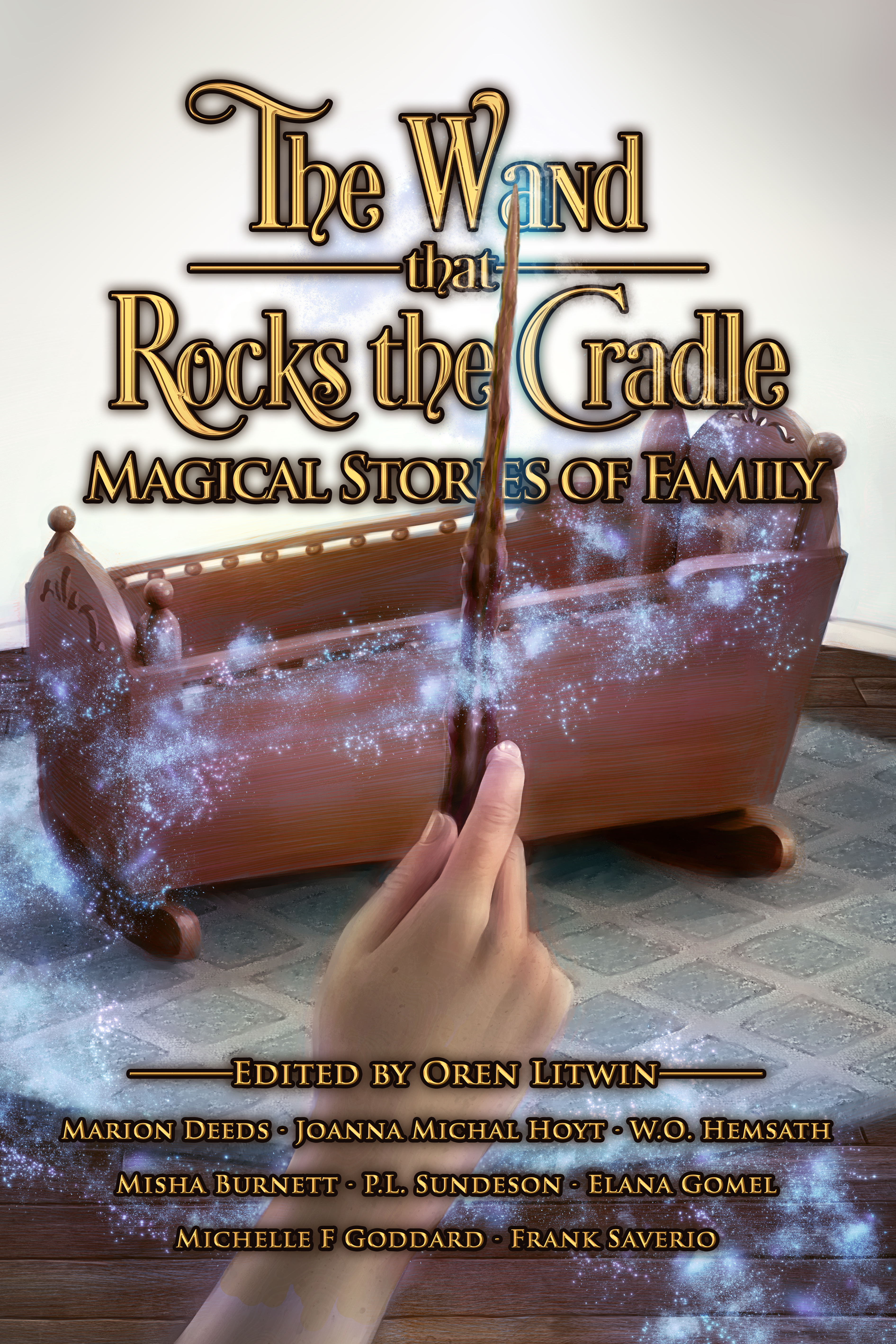
NEW BOOK RELEASE: “The Wand that Rocks the Cradle: Magical Stories of Family”

09 Monday Sep 2019

Posted by Oren Litwin in Lagrange Books, Self-Promotion, Writing

≈ Leave a comment

Tags

elana gomel, fantasy anthology, Frank Saverio, Frank Zafiro, Free Kindle, Hemsath, joanna hoyt, Kindle Unlimited, Marion Deeds, Michelle Goddard, misha burnett, new release, paranormal fantasy, short story anthology, Sundeson

At last, after many long months of work and the fantastic contributions from our authors, The Wand that Rocks the Cradle: Magical Stories of Family is live on Amazon! Available in both Kindle and paperback formats for your reading pleasure. And if you’re enrolled in Kindle Unlimited, it’s included in your subscription!

This anthology celebrates the exhilarating wonders and hidden depths of family, as only fantasy can do. Featuring celebrated and award-winning authors, these stories will make you laugh, cry, and wish for more. Check it out, along with other anthologies from Lagrange Books!

coverhighres

The Wand that Rocks the Cradle: a Fantasy Anthology Coming in September!

16 Friday Aug 2019

Posted by Oren Litwin in Uncategorized

≈ 1 Comment

I’ve been sadly quiet since May, mostly because I’ve been trying to juggle several different projects. First off, the long-running “Politics for Worldbuilders” project is finally being compiled into a book series; the first volume is nearing completion. Second, Lagrange Books is getting ready to publish our first single-author book, by fantastic author Misha Burnett. More news on that soon…

But it’s the third project, which was actually the first project, that I want to tell you about.

Back in May, I was spamming everyone with the Kickstarter project for The Wand that Rocks the Cradle, our fantasy anthology on magical families. Since we met our funding goal, I’ve been working hard to finish the editing, coordinate with our cover designer (the talented Melody Knighton), and produce the actual book. And now, behold:

We are now taking pre-orders on Amazon for the Kindle edition, with a special pre-release price of $2.99; once we launch in September the price will go up to $3.99.

(But there’s another way you can read it for free… If you sign up for the Lagrange Books mailing list, you can join the Advance Reader Team—you’ll get access to prerelease copies of Lagrange publications, in exchange for leaving totally honest reviews on Amazon, Goodreads, or other online sites. This is a totally optional, but totally fun, way to be involved.)

We’re all incredibly excited for this release. And once you start reading, you will be too!


Fantastic audiobook performance of my Chanuka fairy-tale!

30 Thursday May 2019

Posted by Oren Litwin in Self-Promotion

≈ Leave a comment

Tags

audiobook, chanuka, dragon, free audiobook, Hanukka, podcast

If you like audiobooks and podcasts, and you have kids (and even if not!), and you like fantasy fiction, you definitely need to give Elderberry Tales a listen. The host and voice-actor, Carrie Coello, provides performances of classic and new tales. For this week, she graciously agreed to feature one of my own stories, a fairy tale about the holiday of Chanuka called The Princess, the Dragon, and the Baker.

Grumpy dragon is grumpy...

Grumpy dragon is grumpy…

You can hear the podcast on Elderberry Tales here. When I get a little time I’m going to be setting it up as an audiobook for sale, but you can beat the rush and download it for free!

Only a Few Hours Left for “The Wand that Rocks the Cradle”!

28 Tuesday May 2019

Posted by Oren Litwin in Lagrange Books, Self-Promotion

≈ Leave a comment

Tags

Fantasy, Kickstarter, new book, short stories, short story, short story anthology

The Kickstarter campaign for The Wand that Rocks the Cradle is about to end, and we have blown past our goal with room to spare. I can’t wait to get to work publishing these great stories!

If you were thinking of backing this anthology, now is your last chance. See you there…

← Older posts
Newer posts →

Recent Posts

  • A Rabbi Shows Up in the “Dresden Files”
  • What Went Wrong in Kung Fu Panda 2
  • Johnny Cash and the Art of Adaptation
  • An Aside on Early Disney
  • Different Types of Federalism

Meta

  • Create account
  • Log in
  • Entries feed
  • Comments feed
  • WordPress.com

Not a fan of RSS? Enter your email address to follow this blog and receive notifications of new posts by email.

Join 230 other subscribers

Archives

  • January 2026
  • December 2025
  • November 2025
  • September 2025
  • July 2025
  • May 2025
  • February 2025
  • January 2025
  • September 2024
  • July 2024
  • November 2023
  • October 2023
  • September 2023
  • July 2023
  • June 2023
  • May 2023
  • April 2023
  • March 2023
  • February 2023
  • January 2023
  • December 2022
  • November 2022
  • October 2022
  • August 2022
  • July 2022
  • June 2022
  • May 2022
  • April 2022
  • March 2022
  • January 2022
  • December 2021
  • November 2021
  • August 2021
  • July 2021
  • June 2021
  • June 2020
  • May 2020
  • November 2019
  • September 2019
  • August 2019
  • May 2019
  • April 2019
  • March 2019
  • February 2019
  • January 2019
  • December 2018
  • October 2018
  • August 2018
  • July 2018
  • June 2018
  • May 2018
  • April 2018
  • March 2018
  • February 2018
  • July 2017
  • February 2017
  • December 2016
  • December 2015
  • December 2014
  • November 2013
  • August 2013
  • May 2013
  • April 2013
  • January 2013
  • November 2012
  • October 2012
  • September 2012
  • August 2012
  • July 2012
  • June 2012
  • May 2012

Categories

  • Better Fantasy
  • Credit
  • Economics
  • Education
  • Finance
  • Health
  • History
  • Homeschooling
  • Investing
  • Lagrange Books
  • Manifesto
  • Military
  • Movies
  • Music
  • NaNoWriMo
  • Politics
  • Politics for Worldbuilders
  • Real Estate
  • Revolution
  • Self-Actualization
  • Self-Promotion
  • State Formation
  • Uncategorized
  • War
  • Weapons
  • Writing
Links on this site may lead to products for which the owner may receive compensation.

Website Powered by WordPress.com.

Privacy & Cookies: This site uses cookies. By continuing to use this website, you agree to their use.
To find out more, including how to control cookies, see here: Cookie Policy
  • Subscribe Subscribed
    • Building Worlds
    • Join 132 other subscribers
    • Already have a WordPress.com account? Log in now.
    • Building Worlds
    • Subscribe Subscribed
    • Sign up
    • Log in
    • Report this content
    • View site in Reader
    • Manage subscriptions
    • Collapse this bar
 

Loading Comments...